
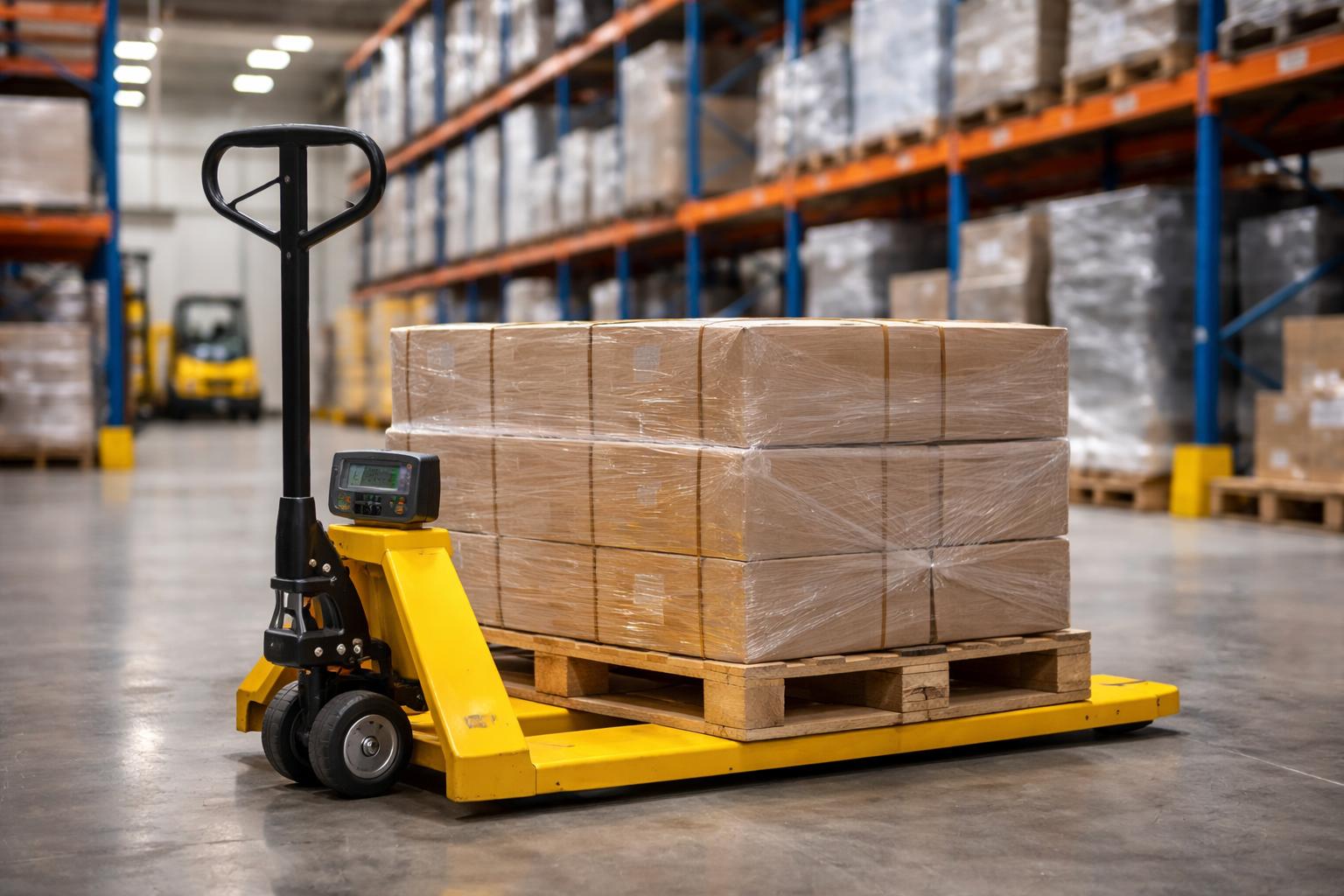
In the fast-paced world of logistics, warehousing, and manufacturing, efficiency is the name of the game. Every minute spent guessing weights or dealing with shipping adjustments is a minute wasted.
Whether you are shipping finished goods to a retailer or managing incoming raw materials, knowing the exact weight of your cargo is vital. To maintain smooth operations and protect your bottom line, investing in industrial-grade pallet scales is one of the smartest decisions a facility manager can make.
What Is a Pallet Scale?
A pallet scale, often referred to as a floor scale, is a heavy-duty weighing platform designed specifically to handle the size and weight of standard shipping pallets. Unlike smaller bench scales, these devices are built low to the ground.
This low profile allows forklifts to easily lower heavy loads onto the platform, or for pallet jacks to roll onto them using a ramp. They are constructed with rugged materials, typically steel, to withstand the constant impact and heavy foot traffic of a busy warehouse environment.
Stop Overpaying for Shipping
The most immediate benefit of using a precise pallet scale is cost control regarding freight. Shipping carriers are stricter than ever regarding weight limits and pricing tiers. If you estimate the weight of a pallet and guess too low, the carrier will reweigh it at their terminal.
When they find the discrepancy, they will charge you a “re-weigh fee” plus the difference in shipping costs.
Conversely, if you guess too high “just to be safe,” you are voluntarily paying for weight you aren’t shipping. Over the course of a year, these inaccuracies can leak thousands of dollars from your budget. A reliable scale ensures you pay exactly what you owe, no more, no less.
Inventory Control and Safety
Beyond shipping costs, these scales are crucial for inventory management. If you sell products by weight, or if you need to verify that a supplier sent you the correct amount of material, a pallet scale acts as your checkpoint. It allows you to catch discrepancies immediately upon receipt, rather than discovering a shortage weeks later during production.
Safety is another critical factor. Every truck, storage rack, and forklift has a maximum load capacity. Overloading a truck is illegal and dangerous, while overloading warehouse racking can lead to catastrophic collapses. Weighing your pallets ensures that you remain within safe operating limits at all times.
Choosing the Right Equipment
When selecting a scale, you need to look for durability and certification. High-quality models from suppliers like Prime Scales often come with “NTEP certification.” This means the scale is “Legal for Trade,” a requirement if you are buying or selling goods based on that weight.
You should also look for a bright digital indicator that is easy to read in dim warehouse lighting and features like a “tare” function to subtract the weight of the pallet itself.
Conclusion
A pallet scale is not just a piece of metal on the floor; it is a tool for financial protection and operational efficiency. By ensuring accurate measurements, you avoid fines, reduce shipping costs, and maintain a safe working environment.
Upgrading your weighing equipment is a straightforward step that yields immediate returns for any business handling heavy freight.